Most people who have faith in the resurrected Messiah, Yeshua of Nazareth, and who are involved in the Torah observant movement are acquainted with the set-apart Holy Days listed-off in Leviticus chapter 23: the weekly Shabbat, Passover & Unleavened Bread, Shavuot (the Feast of Weeks), Yom Teruah (the Feast of Trumpets), Yom Kippur (the Day of Atonement), Sukkot & Shemini Atzareth (the 8th Day). Within the Dead Sea Scrolls, there appears to have been preserved by the Qumran community additional firstfruits festivals: namely New Wine and New Oil. According to the Temple Scroll 11Q19, after Shavuot (Firstfruits of Wheat) there is another 50 day count to the Feast of New Wine. After the Feast of New Wine there is another 50 day count to the Feast of New Oil. This creates a 150-day harvest season beginning with the barley wave-sheaf offering known as the “omer”. Since the Firstfruits of New Wine and New Oil are not included in the annual appointed times recorded in the Torah, we are not considering them as “High Holy Days” – and yet we can infer the importance of new wine and oil based on several passages from the Tanakh and New Testament. The purpose of grain, new wine, and oil symbolized blessings for obedience, cursing for disobedience, and were also to be a provision to the priesthood through tithing.
Blessing
“Thus Yisra’ĕl dwells in safety, the fountain of Ya‛aqoḇ alone, in a land of grain and new wine. His heavens also drop down dew.” – Deuteronomy 33:28
In the Book of Deuteronomy chapter 7, YHWH promises to clear out the enemies of the children of Israel when He brings them into the land that they are going to possess. He warns them to not make any covenants with the people whom they are displacing; not to intermarry and not to serve their idols. Instead the children of Israel are told to break down the altars and destroy the idols of the nations, and to diligently guard the commandments and instructions of YHWH. If they do these things, then He will guard the covenant that He made with their forefathers, and He will bless them abundantly, as the text says:
“And shall love you and bless you and increase you, and shall bless the fruit of your womb and the fruit of your land, your grain and your new wine and your oil, the increase of your cattle and the offspring of your flock, in the land of which He swore to your fathers to give you.” – Deuteronomy 7:13
Continuing on in chapter 11 of Deuteronomy, the Almighty reminds them, “you shall love יהוה your Elohim and guard His charge: even His laws, and His right-rulings, and His commands, always.” (11:1) He reminds them He, by His own mightiness, defeated the Egyptians and other enemies of Israel. When they go into the land that He is giving to them, they are to guard His commands so that their days may be long. He tells them that His eyes are always on the land, and that if they will diligently guard His ways:
“Then I shall give you the rain for your land in its season, the early rain and the latter rain, and you shall gather in your grain, and your new wine, and your oil.” – Deuteronomy 11:14
Here we see the three types of firstfruits mentioned: grain, new wine, and oil. These will be in abundance as a blessing for obedience. These three are also used as tithes to be given to the priesthood. Likewise, as tithes, they are not to be eaten with the peoples’ own gates, but taken to where His name is written. So it makes sense that there are designated times when the people are to bring in the firstfruits of their tithes, as described in the ancient preserved scrolls found near Qumran.
“You are not allowed to eat within your gates the tithe of your grain, or of your new wine, or of your oil, or of the firstlings of your herd or your flock, or of any of your offerings which you vow, or of your voluntary offerings, or of the contribution of your hand.” – Deuteronomy 12:17
“And you shall eat before יהוה your Elohim, in the place where He chooses to make His Name dwell, the tithe of your grain and your new wine and your oil, and of the firstlings of your herds and your sheep, so that you learn to fear יהוה your Elohim always.” – Deuteronomy 14:23
The Levites and the priesthood were not given a land inheritance along with the rest of the tribes. Instead, as part of their service to the tabernacle (and eventually the temple) they were to receive their provisions from the offerings, tithes, and firstfruit. The priests, the Levites, and all the tribe of Levi were to share of these provisions:
“The first-fruits of your grain and your new wine and your oil, and the first of the fleece of your sheep, you give to him.” – Deuteronomy 18:4
“All the best of the oil, and all the best of the new wine and the grain – their first-fruits which they give to יהוה – I have given them to you.” Numbers 18:12
The Almighty put the high priest in charge of the provisions given to the temple service. This is interesting when we look at it within the context of the first century Renewed Covenant body of believers who were considered a priesthood, and also had all things in common according to the book of acts, except for when individuals with held of their contribution to the community; there were consequences, as Ananias and Sapphira learned. Obedience and trust are the key ingredients that lead towards blessing and life.
“My son, do not forget my Torah, And let your heart watch over my commands… Esteem יהוה with your goods, And with the first-fruits of all your increase; Then your storehouses shall be filled with plenty, And your vats overflow with new wine.” – Proverbs 3:10
Curses
Deuteronomy chapters 27 and 28 provide a description of some of the blessings and curses that will come over the people for either guarding and obeying the commandments, or violating them in disobedience. While Deuteronomy 28 starts with the blessings that will be upon those who diligently obey the commandments, verse 15 says thus: “And it shall be, if you do not obey the voice of יהוה your Elohim, to guard to do all His commands and His laws which I command you today, that all these curses shall come upon you and overtake you…” After which the text lists all kinds of horrible curses that reflect the opposite of the blessings listed previously, including:
“And they shall eat the fruit of your livestock and the fruit of your land, until you are destroyed. They leave you no grain, nor new wine, nor oil, nor the increase of your cattle or the offspring of your flocks, until they have destroyed you.” – Deuteronomy 28:51
Well, as it turns out, the children of Israel were hardly loyal to the covenant, worshiping the idols of the nations, making covenants with them, and being lead away by their own lust, greed, and bloodshed. The blessings were removed. They were overcome by their enemies, taken away to foreign lands, and the new wine and oil were removed just as described by the prophets. Notice the prophet Hoshea declares that the new wine would be taken away in it’s appointed time (mo’ed):
“And she did not acknowledge that I gave her grain, and new wine, and oil, and increased her silver and gold which they prepared for Ba‛al. Therefore I shall turn back and shall take my grain in its time and My new wine in its appointed time, and I shall take away My wool and My linen covering her nakedness.” – Hoshea 2:8-9
On and on, the prophets mourn and declare an end to the firstfruits of grain, new wine, and oil.
“And (they) did not cry out to Me with their heart when they wailed upon their beds. For grain and new wine they assemble themselves; they turn away from Me.” – Hoshea 7:14
“Threshing floor and winepress shall not feed them, and new wine shall fail in her.” – Hoshea 9:2
“Wake up, you drunkards, and weep. And wail, all you drinkers of wine, on account of the new wine, for it has been cut off from your mouth.” – Joel 1:5
“The field is ravaged, the ground has mourned, for the grain is ruined, the new wine has dried up, the oil fails.” – Joel 1:10
“And I called for a drought on the land, and on the mountains, and on the grain, and on the new wine, and on the oil, and on whatever the ground brings forth, and on man, and on livestock, and on all the labour of the hands.” – Haggai 1:11
“The new wine shall fail, the vine shall languish, all those glad at heart shall sigh.” – Isaiah 24:7
Even the kings of the other nations, acting as god’s in their own eys, made the promise to give Israel a land of grain and new wine.
“Until I come (says Sennacherib). Then I shall take you away to a land like your own land, a land of grain and new wine, a land of bread and vineyards, a land of olive-trees and honey, and live, and not die. But do not listen to Ḥizqiyahu, when he misleads you, saying, “יהוה shall deliver us.” – 2 Kings 18:32
Also, “Until I come. Then I shall take you away to a land like your own land, a land of grain and new wine, a land of bread and vineyards.” – Isaiah 36:17
Although, Sennacherib would not be successful in this campaign of displacing the people of Judah from the land, they would nevertheless be exiled, eventually, for their treacherous disobedience and breaking of the covenant. However from there, in the land of their exile, they would turn their hearts back to their Creator, confess their sins and the sins of their forefathers, and be restored back to the covenant of promise. Once again, they would receive the grain, new wine, and oil. No longer would they be called “Forsaken” and the land “Deserted,” at least for a time…
Repentance, Redemption, & Return
“יהוה has sworn by His right hand and by the arm of His strength, “No more do I give your grain to be food for your enemies, nor do sons of the foreigner drink your new wine, for which you have labored” – Isaiah 62:8
Thus said יהוה “As the new wine is found in the cluster, and one shall say, ‘Do not destroy it, for there is blessing in it,’ so I do for My servants’ sake, not to destroy them all.” – Isaiah 65:8
When Judah returned to the land after the Babylonian exile, Nehemiah declared to the nobles and leaders who were in the land and taking advantage of the poor state of the people: “Please, give back to them, even today, their lands, their vineyards, their olive-trees, and their houses, also the hundredth part of the silver and of the grain, and of the new wine, and of the oil, that you have taken from them.” – Nehemiah 5:11
As the people of the House of Judah began to return to the land, they diligently began to study and implement obedience to the Torah in their lives and in the community. In doing so, they realized that, “we should bring the first-fruits of our dough, and our contributions, and the fruit from all kinds of trees, of new wine and of oil, to the priests, to the storerooms of the House of our Elohim; and the tithes of our land to the Levites, for the Levites should receive the tithes in all our rural towns. And the priest, son of Aharon, shall be with the Levites when the Levites receive tithes, and the Levites bring up a tenth of the tithes to the House of our Elohim, to the rooms of the storehouse. For the children of Israel and the children of Levi bring the offering of the grain, of the new wine and the oil, to the storerooms where the vessels of the set-apart place are, where the priests who attend and the gatekeepers and the singers are, and we should not neglect the House of our Elohim.” – Nehemiah 10:37-39
“And he had prepared for him a large room, where previously they had stored the grain offerings, the frankincense, and the utensils, and the tithes of grain, the new wine and the oil, which were commanded to be given to the Levites, and the singers and the gatekeepers, and the contributions for the priests.” – Nehemiah 13:5
“And all Judah brought the tithe of the grain and the new wine and the oil to the storehouse.” – Nehemiah 13:12
Although the House of Judah returned, for a time, from their captivity, the House of Israel has still not returned after over 2,700 years. After the return from Babylon, Judea would again fall astray, defiling the priesthood, and even appointing non-Levites as priests, and those who were not descended from the line of Aharon were set-up as high priest. They would sell-out for the highest bidder between the Seleucid and Ptolemy kingdoms, and eventually fall under Roman control. The rightful priests, the Sons of Zadok, would flee to the wilderness, continually at odds with those who usurped power and control of the temple. One day, the Man came claiming that He was not sent except unto the Lost Sheep of the House of Israel. He came healing the sick, the deaf could hear, and the blind received their sight. He brought with Him the renewed covenant, as stated by the prophet Jeremiah and quoted in the book of Hebrews:
“See, the days are coming,” declares יהוה, “when I shall make a renewed covenant with the house of Israel and with the house of Judah, not like the covenant I made with their fathers in the day when I strengthened their hand to bring them out of the land of Egypt, My covenant which they broke, though I was a husband to them,” declares יהוה. “For this is the covenant I shall make with the house of Israel after those days, declares יהוה: I shall put My Torah in their inward parts, and write it on their hearts. And I shall be their Elohim, and they shall be My people. And no longer shall they teach, each one his neighbor, and each one his brother, saying, ‘Know יהוה,’ for they shall all know Me, from the least of them to the greatest of them,” declares יהוה. “For I shall forgive their crookedness, and remember their sin no more.” (Jeremiah 31:31-34)
Jeremiah chapter 31 is all about the redemption and restoration of the House of Israel! Yes, including the grain, the new wine, and the oil:
“And they shall come in and shall sing on the height of Tsiyon, and stream to the goodness of יהוה, for grain and for new wine and for oil, and for the young of the flock and the herd. And their being shall be like a well-watered garden, and never languish again.” – Jeremiah 31:12
The prophets Hoshea, Joel, Amos, and Zechariah concur.
“And it shall be in that day that I answer,” declares יהוה, “that I answer the heavens, and they answer the earth, and the earth answer the grain and the new wine and the oil, and they answer Yizre‛ĕl. “And I shall sow her for Myself in the earth, and I shall have compassion on her who had not obtained compassion. And I shall say to those who were not My people, ‘You are My people,’ while they say, ‘My Elohim!” – Hoshea 2:21-23
“And let יהוה answer and say to His people, “See, I am sending you the grain and the new wine and the oil, and you shall be satisfied by them. And no longer do I make you a reproach among the nations.” – Joel 2:19
“And the threshing-floors shall be filled with grain, and the vats shall overflow with new wine and oil.” – Joel 2:24
“And it shall be in that day that the mountains drip with new wine, and the hills flow with milk. And all the streams of Yehuḏah shall be flooded with water, and a fountain flow from the House of יהוה.” – Joel 3:18
“Look, the days are coming,” declares יהוה, “that the plowman shall overtake the reaper, and the treader of grapes him who sows seed. And the mountains shall drip new wine, and all the hills melt, and I shall turn back the captivity of my people Israel.” – Amos 9:13-14
“For what goodness is His, and what comeliness is His. Grain make the young men thrive, and new wine the maidens!” – Zechariah 9:17
Interesting choice of words used by the prophet Zechariah. New wine is for the maidens, betulot in Hebrew, and parthenous in the Greek Septuagint. Parthenous is interesting because when the Master Yeshua describes the Kingdom of Heaven, He likens it to ten parthenous:
“Then shall the kingdom of heaven be likened unto ten maidens, which took their lamps, and went forth to meet the bridegroom.” Matthew 25:1
Likewise, the apostle Paul writes:
For I am jealous for you with a jealousy according to Elohim. For I gave you in marriage to one husband, to present you as an innocent maiden to Messiah.” (2 Corinthians 11:2)
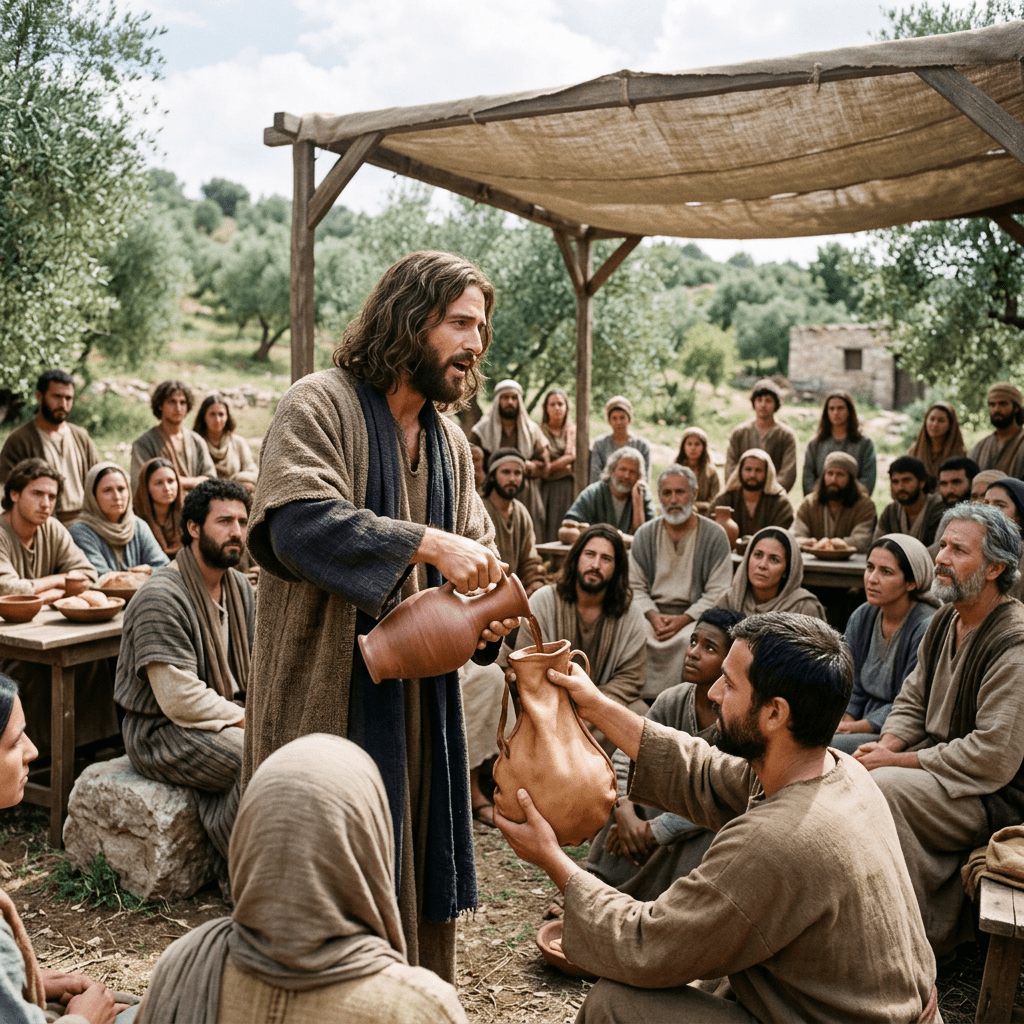
Now, why is this an interesting choice of words, that new wine is for the maidens? Well, when the disciples of John the Baptist and the Pharisees asked Yeshua why His disciples don’t fast, He asked them a rhetorical question: “Are the friends of the bridegroom able to fast while the bridegroom is with them? As long as they have the bridegroom with them they are not able to fast. But the days shall come when the bridegroom shall be taken away from them, and then they shall fast in those days. He then proceeds, “Neither do they put new wine into old wine skins, or else the wine skins burst, and the wine is spilled, and the wine skins are ruined. But they put new wine into fresh wine skins, and both are preserved.” – Matthew 9:17 (Luke 5:37 and Mark 2:22)
Do you see the connection? The new wine is for the maidens, who are preparing themselves for the bridegroom. The maidens are innocent, obedient, and ready to be joined into the covenant relationship that was once given to the children of Israel. The new wine cannot be poured into the dingy old wins skins of disobedience, but must be poured into new, fresh wine skins that are renewed, refreshed, and ready for obedience, having the testimony of Yeshua and guarding the commandments of Elohim. “And no one, having drunk old wine, immediately desires new wine, for he says, ‘The old is better.” – Luke 5:39
There is another place where parthenous is used, by the way:
“And I looked and saw a Lamb standing on Mount Tsiyon, and with Him one hundred and forty-four thousand, having His Father’s Name written upon their foreheads. And I heard a voice out of the heaven, like the voice of many waters, and like the voice of loud thunder, and I heard the sound of harpists playing their harps. And they sang a renewed song before the throne, and before the four living creatures, and the elders. And no one was able to learn that song except the hundred and forty-four thousand who were redeemed from the earth. They are those who were not defiled with women, for they are maidens. They are those following the Lamb wherever He leads them on. They were redeemed from among men, being first-fruits to Elohim and to the Lamb.” – Revelation 14:1-4
The tithe of the grain, new wine, and oil are for the priesthood, and are symbolic of the blessing for obedience to the living instructions of our loving Father. Due to disobedience, these blessings were removed. Now, within the promises of the renewed covenant, entered through faith in the death, resurrection, and eternal life of the Master Yeshuah Ha’Mashiach and lived out in obedience to the Torah of El Elyon, the firstfruits of the grain, new wine, and oil are being restored in concert with the restoration of the House of Israel. These firstfruits are given to the priesthood—and according to 1 Peter 2, you are that priesthood. Yet, at the same time, you are also the firstfruits.
Some may dismiss the idea of recognizing these newly revealed mo’edim, but I encourage you to embrace them. Recognize them for what they represent: visible signs of the restoration that is already taking place.
The book of Revelation also draws attention to the grain, the wine, and the oil. In Revelation 6:6 we read:
“A measure of wheat for a denarius, and three measures of barley for a denarius. And do not harm the oil and the wine.”
Notice the command: “Do not harm the oil and the wine.” There is another group in Revelation that is likewise preserved until their appointed time: the Two Witnesses. Whether this connection is merely thematic or intentionally prophetic is worthy of careful consideration.
Perhaps, if you have not already, it is time to take a closer look at these other feasts of firstfruits. Could their resurgence be indicative of the restoration of all things? Will they reveal the priestly kingdom of the actual First Fruits – those redeemed from among the people of the earth? Do they have actual eschatological significance, or are they merely a delusion of the apostate followers of the Zadok Priestly calendar?
Only time will tell.


Leave a Reply