January 12, 2025
What are tzitzit and why do people wear them? Should you wear them? Should you not wear them?
Like all things Torah the answer to those questions depends on your personal walk and where you are at in that walk. But why do some people wear tzitzit? For the answer to that we turn to the book of Numbers and Deuteronomy.
The YHWH said to Moses, “Speak to the people of Israel, and tell them to make tassels on the corners of their garments throughout their generations, and to put a cord of blue on the tassel of each corner. And it shall be a tassel for you to look at and remember all the commandments of the YHWH, to do them, not to follow after your own heart and your own eyes, which you are inclined to whore after. So you shall remember and do all my commandments, and be holy to your God. I am the YHWH your God, who brought you out of the land of Egypt to be your God: I am the YHWH your God.”
(Num 15:37-41)
Here is verse 38 in Hebrew, the word tzitzit is underlined:
דַּבֵּר אֶל־בְּנֵי יִשְׂרָאֵל וְאָמַרְתָּ אֲלֵהֶם וְעָשׂוּ לָהֶם צִיצִת עַל־כַּנְפֵי בִגְדֵיהֶם לְדֹרֹתָם וְנָתְנוּ עַל־צִיצִת הַכָּנָף פְּתִיל תְּכֵלֶת

Numbers chapter 15 explains that the children of Israel were given the instruction to wear tzitzit so that they look on them and remember the commandments of YHWH, to do them, and not follow after their own heart and their own eyes. They are to wear the tassels so they remember the commandments, and remain set-apart to YHWH who brought them out of Egypt.
What are tzitzit though? Strong’s defines the word (H6734), as a floral wing-like projection, a lock of hair, a tassel, fringe, or lock.
Practitioners of Judaism wear the tassels on a special shirt called a tallit katan, that is sort of like a poncho with tassels on each corner – only many of them (most, but not all) leave out the blue thread, instead opting for all-white tassels.
Many in the Torah observant community who have the faith that Yeshua of Nazareth is the resurrected Messiah, also wear tassels, although they tend to add colored threads, particularly blue, to them in observance of this instruction. Some don’t wear them at all because they have not been convicted of that command and don’t feel comfortable wearing them. Still others think that they should look more like a fringe all along the bottom of the garment.
So which is it? The command doesn’t say to wear tassels through the four belt-loops of your pants (as is the most popular among followers of Yeshua). Is it merely a fringe with a blue ribbon around it? Do you need to wear them at all? It all goes back to our personal walk with Yeshua in the Torah, and we’re all at different places. You need to study to show thyself approved.
Let’s break down the words.
We already looked at tzitzit, and it appears to represent a lock-like tassel – one that stands out longer from the rest of the garment. This is an identifier that shows us as a set-apart people. It’s also conspicuous – it should stand out – to not only set-us apart as a the people of Yah, but also as a reminder to remember all of the commandments.
Tzitzit is derived from tzit (Strong’s H6731) which can mean a flower, bloom, shining thing, wing, feather. They should stand out as a beautiful reminder of who we are in the Father – we are His people! They are not merely fringes on a garment, but are to be decorative like a flower blooming – it’s the same word used when Aaron’s rod “blossomed”. They are to be long like a lock of hair – like in Ezekiel 8:3. The tzitzit should be on the four “wings” of our garments. They need to at least have a blue thread that twists around the tassel like a cord of twine that binds things together.
Regarding making them on the corners of their garments. The word for “corner” is kanaph (H3671 – כַּנְפֵי) which means: extremity, edge, corner, wing (like Exodus 19:4 “Ye have seen what I did unto the Egyptians, and how I bare you on eagles’ wings, and brought you unto myself.”)
Based on this understanding from Numbers chapter 15, we see that the children of Israel are to have lock-like blossoms, or decorative tassels hanging from the wing’s of their garments. These tassels are to set-them apart and remind them of Yah’s commandments.
Deuteronomy 22:12 has a similar instruction, though a little different:
“You shall make yourself tassels on the four corners of the garment with which you cover yourself.”
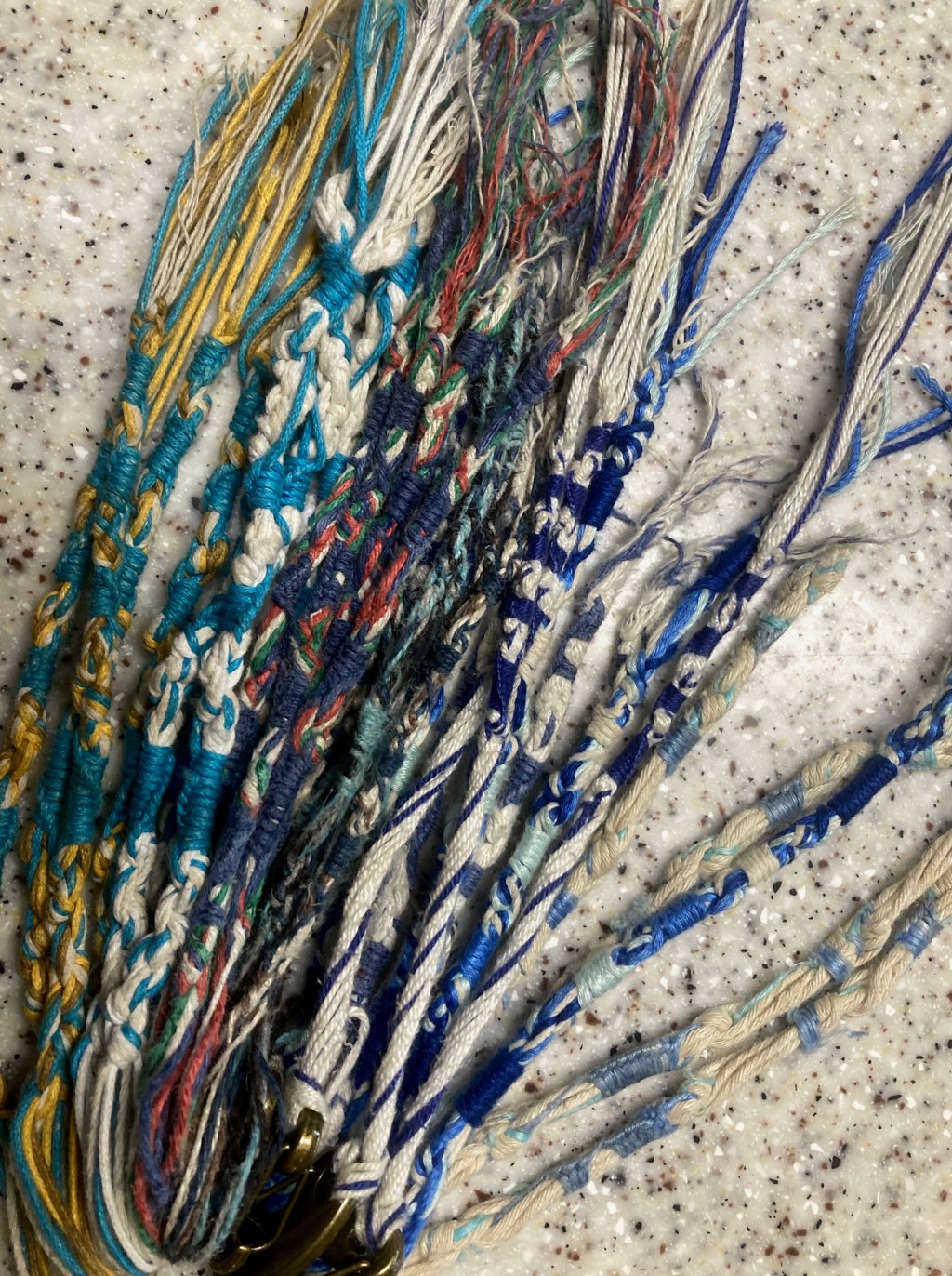
Here, Deuteronomy specifically designates that there are “four” wings of a garment – four corners. The Hebrew says arba kanaphot, literally four corners. However, the word for fringe is different. In this verse the word is gadilim (H1434) which are intertwined threads of twisted work. If you’ve ever tied your own tzitzit, (or done your own dreadlocks) this may help understand that the decorative fringes on the four corner extremities of our garments should be intertwined threads of twisted work.
Gadil is a noun that is derived from the verb gadal (H1431) which means to be great, to grow, magnify, do great things. So these tassels on the four extremities of our garments need to stand out – like us – they need to be great; not merely fringes that run along the border of any old garment. They need to magnify the greatness of YAH in our lives. They set-us apart as a distinctive people.
The noun, gadil, and the verb gadal are related to the adjective gadel which means to become great. All three are spelled with the same three letters. The letters are gimel, dalet, and lamed: גָּדֵל – just with different vowel points for each word.
Aaron the High Priest was known as the Kohen Ha’Gadol: the Great Priest. If you take the letter vav and insert it into גָּדֵל (gadel) you get גָּדוֹל (gadol) which is the word used in Kohen Ha’Gadol. The vav represents a nail pictographically – something meant to secure – but it sort of resembles a tassel as well. The tassel, the tzitzit, is what sets us apart as a royal priesthood. What makes us a royal priesthood though is the Blood of Yeshua, the Kohen Ha’Gadol of the order of Melkitzedek who was nailed to the tree. The tzitzit merely symbolize that commitment to the royal priesthood and commandments of Yah for those who hold to the testimony of Yeshua, our High Priest and King.
“But you are a chosen people, a royal priesthood, a holy nation, a people for his own possession, that you may proclaim the excellencies of him who called you out of darkness into his marvelous light.” (1 Peter 2:9)
However you choose to wear tzitzit, if you choose to wear them at all, make them great! Make them set-apart like a long lock of hair and a beautiful flower blossoming. These are not merely fringes along the hem of your garment (there is a description of that in Exodus 28:33) – these are tied and twisted threaded works that should magnify Yahweh in our lives and to the world, and glorify His commandments. They should set-us apart as a Am Qadosh, a Holy People, and a Royal Priesthood set-apart unto YHWH.

 The Wilderness Assembly
Leave a comment